
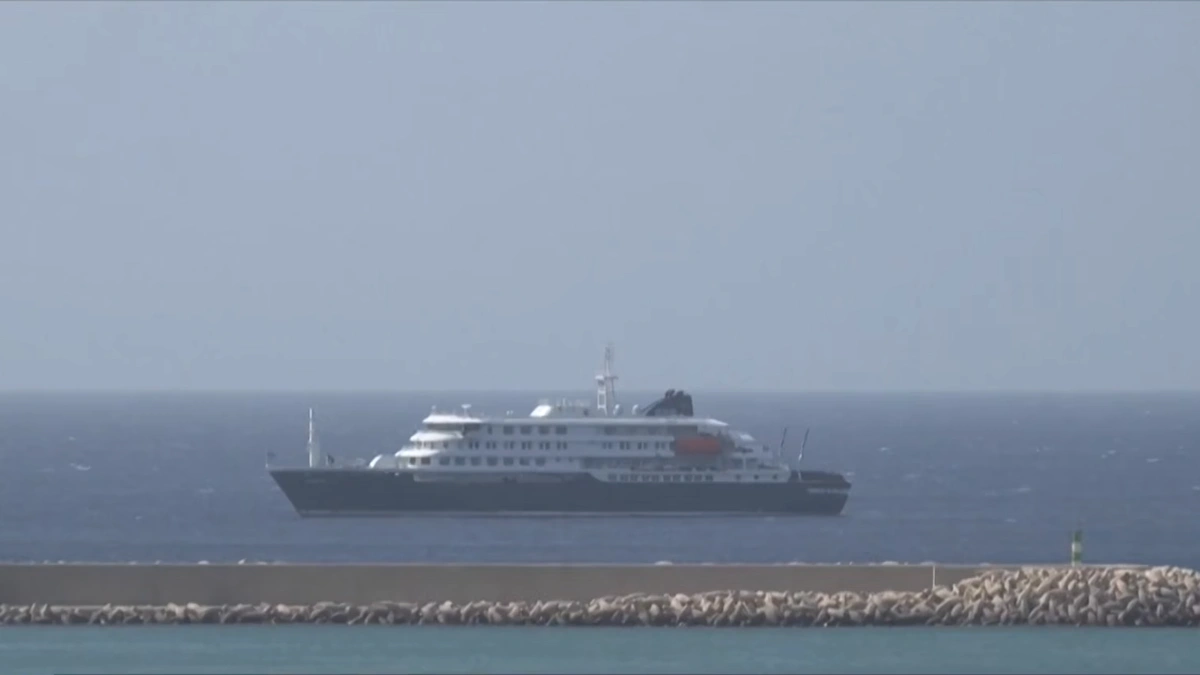
The recent Hantavirus outbreak aboard a luxury expedition ship has reignited global concerns regarding zoonotic diseases and the safety of international travel. While the world has become accustomed to the rapid spread of respiratory viruses, this specific incident highlights the unique lethality and complex transmission dynamics of rodent-borne pathogens.
As health authorities scramble to contain the situation off the coast of West Africa, understanding the biological nature of this virus and the international response to it is critical.
Understanding the Nature of Hantavirus

Hantavirus refers to a family of viruses primarily hosted by rodents, such as mice, rats, and voles. Unlike many other viral threats, it does not typically circulate in the human population but instead “spills over” when humans come into contact with infected animal waste.
The Current Crisis: MV Hondius
The current international medical emergency focuses on the MV Hondius, a Dutch-operated vessel currently anchored near Cape Verde. The ship, which was traveling from South America to Europe, became a floating quarantine zone after multiple passengers developed severe respiratory failure. As the ship and sea issues were not much that we saw in the Strait of Hormuz, it’s another sea issue.
Core Facts of the Outbreak
The following table summarizes the data confirmed by health officials as of May 2026:
| Category | Statistic | Location/Details |
| Confirmed Deaths | 3 | Dutch and German Nationals |
| Suspected Cases | 5 | Currently isolated on MV Hondius |
| Primary Strain | Andes Virus | Known for person-to-person risk |
| Incubation Period | 1 to 8 weeks | Difficult to track during travel |
| Vessel Status | Quarantined | Moored off the coast of Praia |
Symptoms and Disease Progression
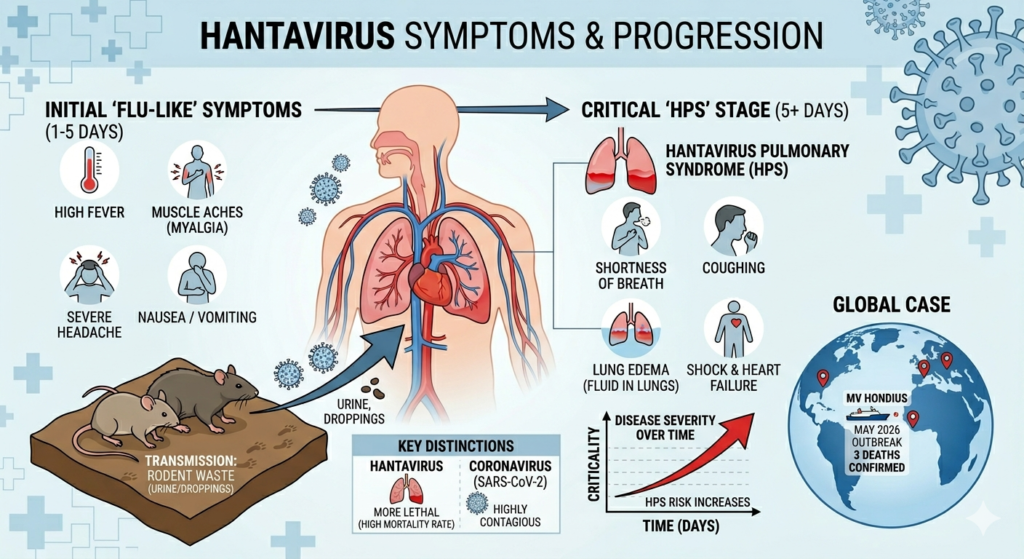
Hantavirus is particularly dangerous because its early stages are easily confused with more common illnesses. This led to significant delays in the initial diagnosis of the passengers on the MV Hondius.
- Early Phase: Patients experience intense fatigue, high fever, and muscle aches. Many also report “stomach flu”- like symptoms, such as nausea and abdominal pain.
- The Respiratory Pivot: After several days, the virus attacks the lungs. This stage, known as Hantavirus Pulmonary Syndrome (HPS), causes fluid to accumulate in the lungs, leading to severe shortness of breath.
- Comparison to Coronavirus: While Coronavirus (SARS-CoV-2) is highly contagious but has a lower case-fatality rate for the average person, Hantavirus is much harder to catch but significantly more lethal, often killing up to 40% of those infected.
Global Response: WHO and Africa CDC
The World Health Organization (WHO) has taken a lead role in managing the crisis in Cape Verde. Because Hantavirus is uncommon in West Africa, a specialized response is vital to prevent localized spread.
- Bio-Containment Evacuations: The WHO is coordinating with the South African Air Force to evacuate the most critical patients using high-level isolation pods.
- Genomic Sequencing: Samples have been rushed to laboratories in Senegal and South Africa to determine if this specific strain has mutated to become more easily transmissible between humans.
- Surveillance of Other Threats: While managing this outbreak, the WHO remains on high alert for other “trending” viruses such as Avian Influenza (H5N1) and the Oropouche virus, which are currently seeing a rise in cases globally.
Conclusion and Public Health Outlook
The situation aboard the MV Hondius serves as a stark reminder that the threat of zoonotic spillover remains constant. Unlike the Coronavirus pandemic, which was driven by airborne social spread, the Hantavirus threat is often tied to environmental hygiene and contact with wildlife.
International health agencies emphasize that while the general public is not at immediate risk, travelers should remain vigilant. Avoiding contact with rodents and recognizing the symptoms of HPS can be the difference between a treatable illness and a fatal outcome.
As the passengers on the MV Hondius wait for clearance, the world watches to see whether this outbreak can be contained within the ship’s steel walls.