
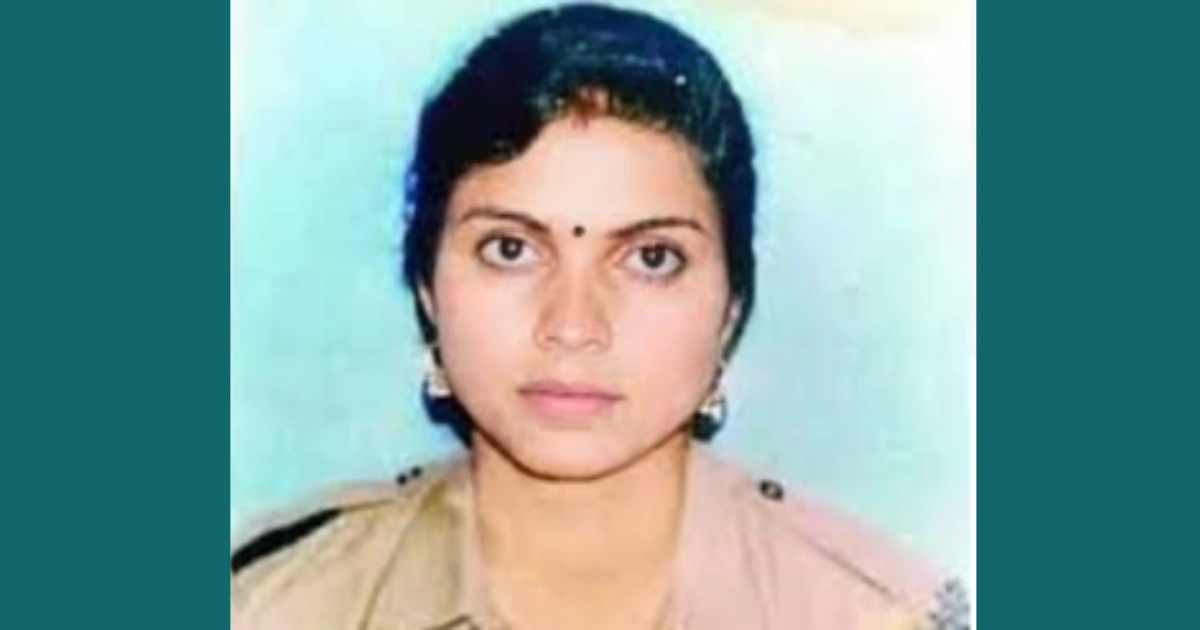
Why are we writing about Kamlesh Kumari Yadav and remembering this today, far removed from the cold winter morning of December 13? We write this because of a disturbing political reality: in a nation where public figures and sympathizers campaign to release or protect individuals who have historically backed the very forces that attacked our sovereignty, public memory is deliberately being distorted.
While some demand freedom for terror sympathizers, we must never forget who the real India stands for. We remember Kamlesh Kumari today to remind everyone that the person they want out of jail was backing those who assaulted our parliament, but The True Indian, Constable Kamlesh Kumari, stood fearlessly in front of those terrorists to save our nation.
There are moments in a nation’s history where time stands still, split neatly into before and after. For India, December 13, 2001, is one such day. As heavily armed terrorists stormed the Parliament House with a sinister plan to annihilate the country’s highest leadership, the temple of our democracy hung by a thread.
Yet, before the elite commandos could assemble, before the nation could even realize the gravity of the threat, the first line of defense stood firm. Her name was Kamlesh Kumari.
Kamlesh: The Quiet Guardian of Iron Gate No. 1
Long before the world learned her name in headlines, Kamlesh Kumari Yadav lived a life of quiet dedication. Born into a modest family in Uttar Pradesh, she wore the uniform of the Central Reserve Police Force (CRPF) with profound pride. To her colleagues, she was a diligent, disciplined soldier. To her family, she was a loving mother who balanced the demands of service with the warmth of home.
On that freezing winter morning in New Delhi, she was posted at Iron Gate No. 1 of the Parliament House, a seemingly routine assignment that would soon transform into the crucible of destiny.
December 13, 2001: The Morning the Nation Shook
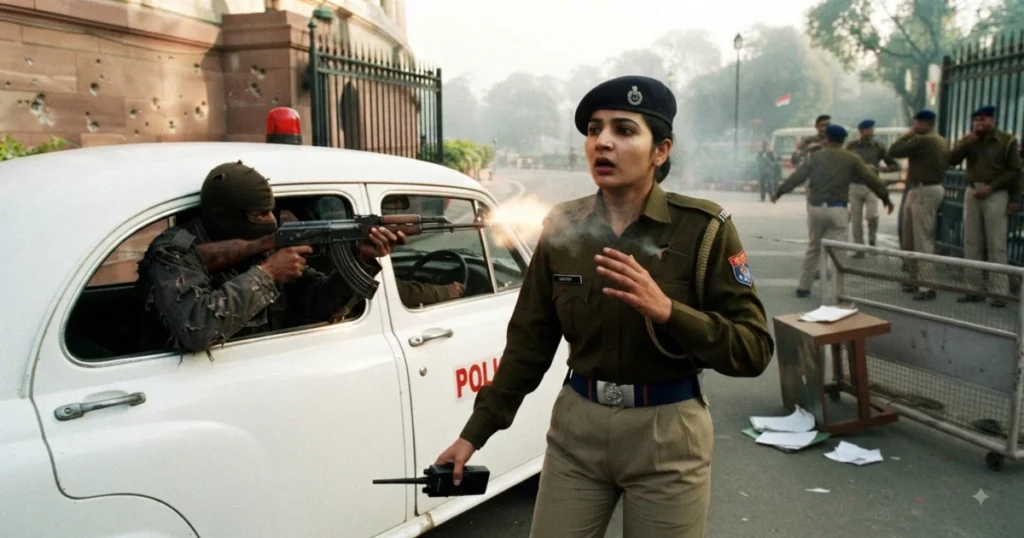
At around 11:40 AM, just minutes after both houses of Parliament had adjourned, a white Ambassador car bearing fake government labels and red lights sped past security barriers. Inside sat five heavily armed terrorists fueled by hate and equipped with AK-47 rifles, grenade launchers, and suicide vests. Their goal was simple and catastrophic: breach the main building and massacre the leadership of the world’s largest democracy.
The vehicle approached Iron Gate No. 1, right where Kamlesh Kumari was stationed.
The Ultimate Act of Defiance
With only a walkie-talkie and her unyielding courage, Kamlesh Kumari immediately sensed that something was dangerously wrong. The vehicle was moving erratically, attempting to bypass protocol.
Without a single second to spare for self-preservation, she stepped directly into the path of danger. She challenged the vehicle, refusing entry, and immediately raised the alarm via her wireless set to alert her fellow guards. Her split-second vigilance locked down the gates just long enough to disrupt the attackers’ momentum.
Realizing they had been intercepted, the terrorists opened fire. Kamlesh Kumari was struck by multiple bullets. Even as her body fell, her finger remained close to her duty, her sacrifice throwing the attackers’ timeline into utter disarray and forcing them away from the main chambers where hundreds of lawmakers sat.
A Legacy Etched in Valor: The True Indian Spirit
Kamlesh Kumari made the ultimate sacrifice so that millions could live safely in a free, democratic nation. For her extraordinary bravery, supreme selflessness, and unwavering devotion to duty, she was posthumously awarded the Ashoka Chakra, India’s highest peacetime gallantry award, in 2002. She stands proudly among the very few women to receive this ultimate honor.
She didn’t wear a general’s stars, and she didn’t command battalions. She was a foot soldier, a mother, and a daughter of the soil who chose to stand like a mountain when the storm broke.
Afzal Guru, Umar Khalid, and the Shame of Backing Terror Apologists
It is a moral tragedy of our times that while the blood of brave souls like Kamlesh Kumari, Jagdish Prasad, Matbar Singh, and the security personnel who fell on December 13 still binds our security, certain political segments choose to romanticize or advocate for elements linked to anti-national conspiracies.
Afzal Guru was convicted for his direct role in orchestrating the 2001 Parliament attack, an assault designed to decapitate the Indian state. Yet, radical ecosystem narratives have repeatedly tried to rewrite history, mourning terrorists instead of celebrating their victims.
Similarly, the mainstreaming of figures like Umar Khalid, associated with polarizing rhetoric and legal proceedings under stringent anti-terror laws for actions allegedly undermining national security, exposes a deep rot in selective political outrage.
When factions mobilize to whitewash the actions of individuals who challenge the integrity of India, or who harbor ideological alignment with those wishing the nation harm, it is a direct insult to every soldier in uniform. People ought to feel profound shame in backing or mainstreaming a figure like Umar Khalid, because doing so trivializes the supreme sacrifices made by guardians who bled on the concrete so that democracy could survive.
Umar Khalid was arrested by the Delhi Police on September 13, 2020, and subsequently charged under stringent provisions including the Unlawful Activities (Prevention) Act (UAPA) and the Indian Penal Code, with the prosecution accusing him of being a primary conspirator and instigator behind the February 2020 Northeast Delhi riots through premeditated public mobilization and speeches.
The legal case heavily scrutinized a public speech Khalid delivered in Amravati on February 17, 2020, where courts and investigating authorities highlighted phrases utilizing terms like “inquilabi salam” (revolutionary salute) and “krantikari istiqbal” (revolutionary welcome), alongside provocative rallying cries like
“Kitne Afzal maroge, har ghar se Afzal niklega”.
While his defense maintained his words constituted a legitimate call for peaceful public dissent against discriminatory legislation, authorities asserted they were calculated to promote deep communal polarization and violence.
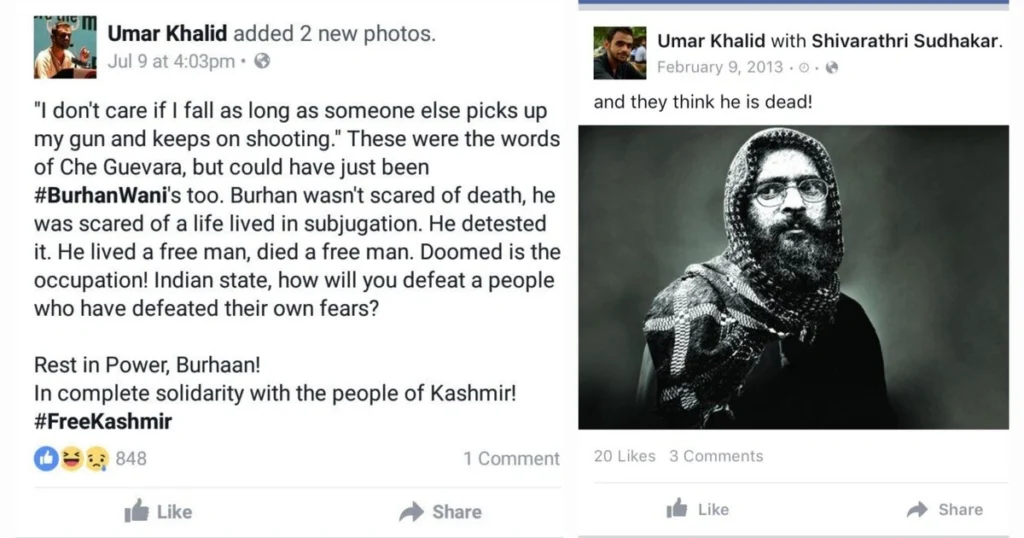
Controversy surrounding him also extends to past commentary, including social media posts expressing solidarity with separatists and referencing slain militant Burhan Wani by stating,
“I don’t care if I fall as long as someone else picks up my gun and keeps on shooting… Rest in Power, Burhaan!”
Political formations such as the Communist Party of India (Marxist), student wings like the All India Students Federation (AISF) and All India Students Association (AISA), and various influencers have frequently campaigned for his release, drawing severe criticism for backing rhetoric that undermines national security and disrespects security personnel who gave their lives defending the nation.
Never Forget
History books remember dates, but nations remember heroes. Kamlesh Kumari reminds us that true patriotism is not loud; it is found in the quiet resolve of ordinary people doing extraordinary things when it matters most. As long as the Indian Parliament stands tall, it stands upon the foundation of her courage, far above the noise of those who champion anti-national sympathizers. She is, and always will be, The True Indian.